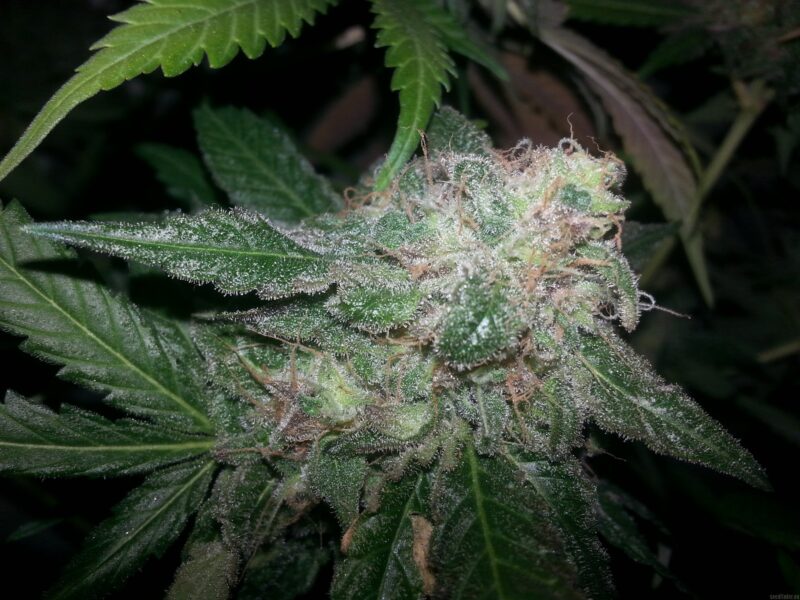
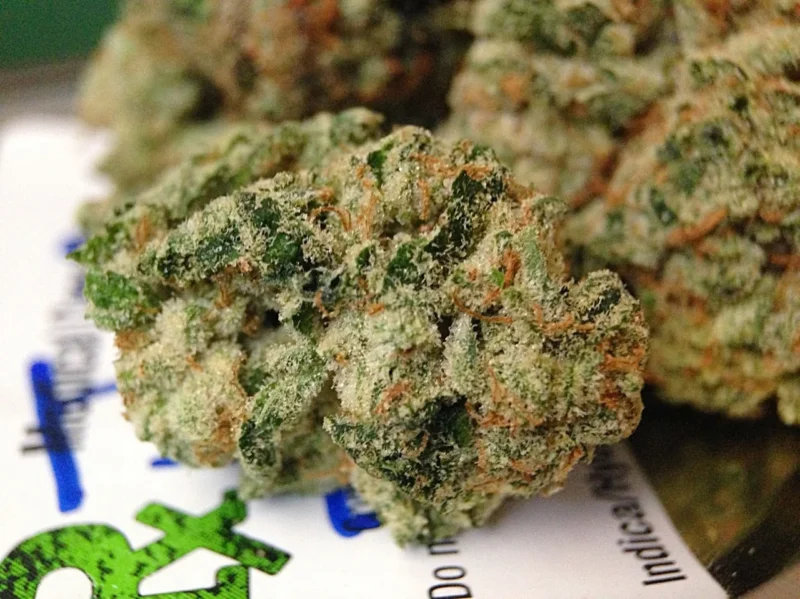
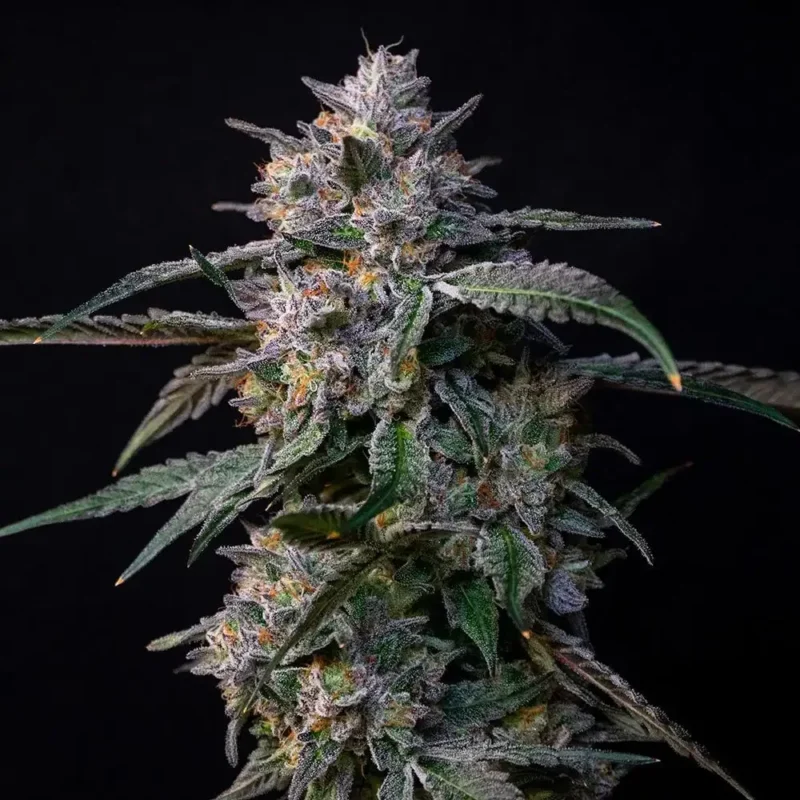
Sensi Star
Sensi Star is an indica dominant hybrid. Its flavor notes include pine, sweet and herbal.
Updated
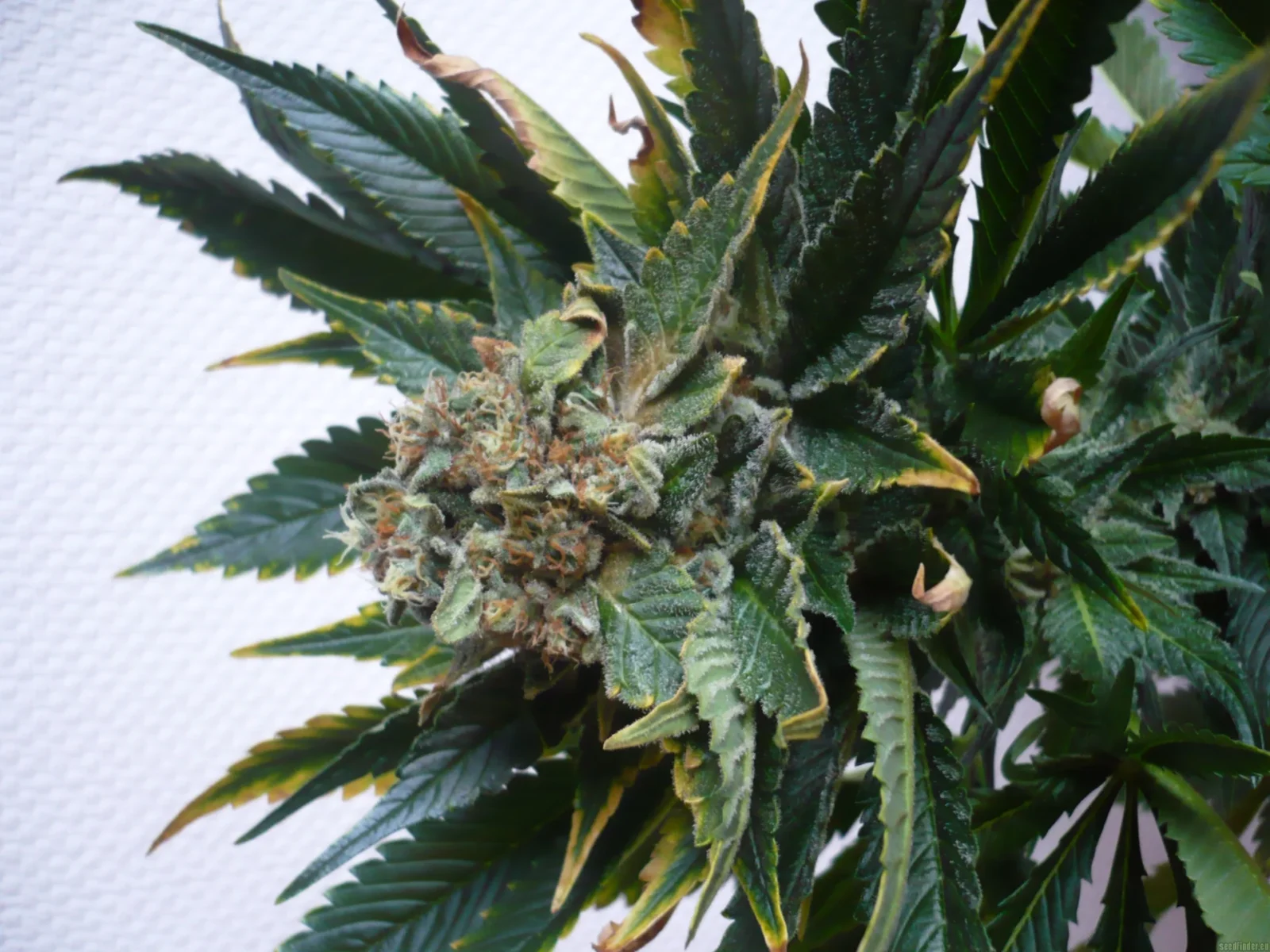
Strain at a glance
- Reported type
- Indica dominant hybrid
- Reported THC
- 20%–26%
- Reported CBD
- Not reported
View the classification diagram

Classification is conventional. Cannabinoid measurements vary by batch.
- Reported flavors
- Citrus, Herbal, Pine, Sweet
- Reported effects
- Creative, Euphoria, Happy, Relaxing, Sleepy
Sensi Star genetics
The parent strains have not been established in the available information.
The conventional classification is 30% sativa and 70% indica.
Flavor and aroma
Sensi Star combines pine, sweet, herbal and citrus in its flavor profile.
The aroma adds woody and earthy.

Sensi Star effects
Reported Sensi Star effects include creativity, euphoria, a happier mood, relaxation and sleepiness.
Sensi Star THC level and CBD
The published Sensi Star THC level is 20–26%.
CBD has not been documented for this profile.
For a specific product, use its batch laboratory results rather than treating these figures as universal strain specifications.

Related strains
Explore the indica dominant hybrid directory for other profiles in this classification.
Questions about Sensi Star
Is Sensi Star indica or sativa? It is classified as an indica dominant hybrid. The listed split is 30% sativa and 70% indica.
What does Sensi Star taste like? The available description includes pine, sweet and herbal.
Who bred Sensi Star? Paradise Seeds identifies Sensi Star as its cultivar first released in 1995.
Sources for Sensi Star
Profile updates2
Profile text updated.
Profile text updated.
Image credits & editorial sources
About Sensi Star
Sensi Star is a Paradise Seeds cultivar known in its producer account for compact growth, dense resinous flowers and an unusual combination of mint, metal, pine and spice. Its published five-plant grow is particularly informative: the plants finished between 60 and 74 centimeters, with recorded dry weights from 20 to 31 grams. Those observations sit alongside newer catalog figures and a historical award list. Reading the layers separately preserves what was actually observed, what the producer currently advertises and what remains unresolved about the exact pedigree and chemistry.
Sensi Star strain information and Paradise Seeds credit
The Paradise Seeds Sensi Star description, checked on 13 November 2026, places the cultivar's first release in 1995. The name's Sensi element should not be mistaken for a producer attribution to Sensi Seeds. The checked first-party account is published by Paradise Seeds and describes its own cultivar.
The page combines current product specifications, a historical competition list and a grow report attributed to Mr. Power Planter. It also quotes a sensory description associated with breeder Luc. These different parts provide useful context, but they are not one contemporaneous laboratory or breeding record.
The current page's availability notice is also separate from historical identity. An unavailable product can still have an informative surviving description. Neither that notice nor a long-standing name authenticates a flower lot or the custody of a particular seed packet. This supplement uses the producer's public account without issuing an authenticated operator or accession identity.
Sensi Star genetics and differing levels of detail
The current narrative describes Afghan and Indian landrace material with Skunk influences. The grow-report table uses the less detailed phrase Afghani with a hint of sativa. Those are different levels of pedigree description within the same checked page. They should not be silently converted into an exact three-parent crossing formula.
The producer's current product graphic gives 90% indica and 10% sativa. The existing Hemp Lookup record instead gives 70% indica and 30% sativa. That difference remains visible rather than being averaged into a third ratio. The checked material does not provide a genetic assay or accession records that would reconcile the classifications automatically.
Some promotional wording on the page also uses pure-indica language. It should not override the page's own mixed numerical description or become a claim of authenticated landrace purity. The defensible family account retains the regional components, the source's varying descriptions and the uncertainty about individual ancestral selections.
Compact structure and the general growing description
Paradise describes a short, bushy plant with dense colas and substantial side branches. It recommends Sea of Green and Screen of Green as suitable arrangements. These are producer suggestions consistent with its structural account, not the results of a matched trial demonstrating that either technique produces a fixed yield increase.
A current summary graphic places height below 80 centimeters, while the grow report later documents five plants below that threshold under its particular schedule. The agreement is useful context without making the figure a guarantee across every vegetative duration, container or environment.
The structure should also remain distinct from chemical claims. Dense flowers and abundant visible resin explain much of the cultivar's visual reputation, but neither measures THC or terpene concentration. A compact plant can vary in flower composition, and a photograph cannot determine whether a particular specimen is the same Paradise selection.
The five-seed grow and its first 24 days
The published report says Mr. Power Planter germinated five seeds in small peat pots containing seedling soil. One week after germination, the plants were moved into six-liter pots with a prepared soil mix. The grower used an eighteen-hour daily light period before changing the schedule for flowering.
The light transition took place 24 days after germination. At that point the plants measured between 40 and 53 centimeters, a 13-centimeter spread between the shortest and tallest. The report describes fairly consistent development, dark green leaves and moderate side branching.
The text does not provide a modern packet lot identifier or a complete seed-format history for that grow. Its five-plant observations therefore should not be presented as a trial of every current feminized packet. The current product category and the historical grow are useful layers of the source, but they do not establish identical material merely by appearing on the same page.
Lighting, medium and the reported environment
The cultivation table lists a 600-watt HPS lamp, standard grow mix and watering by hand. It gives pH at 6.2–6.8 and an electrical-conductivity ceiling around 1.6–1.8 millisiemens. The narrative connects the restrained nutrient level with the grower's experience of the cultivar.
Daytime temperatures were recorded at 24–28°C, with nights around 18°C. Relative humidity was kept at a maximum of 60% during flowering. Those figures document the reported grow; they are not newly established universal limits for every Sensi Star plant.
The table also names particular fertilizers and a flowering-stage additive. The source does not describe an untreated comparison group, so it cannot isolate the contribution of one product to the final flowers. Its evidence is an observed result under a combination of conditions. The same limitation prevents converting the named lamp's power into a defensible efficiency figure without knowing the dedicated growing area and how the light was allocated.
Flowering development and resin observations
The report describes conspicuous resin by the fifth flowering week and more extensive coverage by about the eighth. It notes similar flower structure across the five plants, dense buds and short leaves that were relatively straightforward to remove during trimming. Those are visual and handling observations.
The account does not quantify resin mass, trichome density or extraction recovery. An apparently white or frosted flower should therefore not become a measured concentration claim. The grower's enthusiasm about the appearance and the producer's reputation are separate from missing chemical evidence.
The current catalog's description of hard, dense colas is broadly consistent with the grow narrative. However, the page supplies no standardized density measurement or matched comparison with another cultivar. The useful detail is the reported combination of compact plant size, substantial flowers and a relatively favorable flower-to-leaf structure, rather than an invented numerical score for each feature.
Sensi Star final heights in the five-plant grow
The table records final heights of 60, 66, 68, 72 and 74 centimeters. Their arithmetic mean is 68 centimeters, and the difference between the shortest and tallest is 14 centimeters. These calculations describe the five reported plants only; they are not a population mean or an expected range for all seeds.
The average is useful because it gives context to the producer's compact-growth description. It should still remain attached to the 24-day vegetative period, six-liter containers and other conditions in that grow. A plant kept vegetative for longer would not automatically be represented by the same height statistics.
The initial 40–53-centimeter interval and final heights also cannot be paired plant by plant from the information supplied. The source does not identify each individual's starting height. It would therefore be unsupported to calculate five individual stretch percentages or decide which starting plant became the 74-centimeter example.
Sensi Star flowering time and the schedule arithmetic
The main description gives eight to nine weeks of indoor flowering, equivalent to approximately 56–63 days. The report says its five plants matured within that interval, but it does not assign an individual harvest day to each height or dry weight. A separate current graphic gives 55–60 days, a nearby but different specification.
Those intervals should remain as published rather than being rewritten into a single exact finish date. The report supports a bounded observation for five plants; the graphic is a current catalog field. They do not have identical evidentiary roles.
Adding the reported 24 vegetative days to 56–63 flowering days gives approximately 80–87 days after germination to harvest for that described schedule. This is explicit arithmetic from the source, not a new grow result. It excludes drying, curing and any period before the source's stated starting point. The page supplies no fixed complete life cycle for every growing arrangement.
Dry harvest weights and the missing area measurement
The five recorded dry weights are 20, 24, 22, 31 and 25 grams. Their sum is 122 grams, and dividing by five gives an average of 24.4 grams per plant. The 11-gram difference between the lowest and highest weights describes variation within that small grow. The largest weight, 31 grams, was 55% greater than the smallest, 20 grams. That relative difference is another calculation from the published weights, not a predicted improvement from a growing method. The report does not isolate why the plants differed or provide a matched comparison that would assign the difference to height, nutrients or any single environmental factor.
Those numbers should not be converted into an area-based yield without a documented dedicated canopy area. The 600-watt lamp listing is also insufficient for a reliable grams-per-watt result if the source does not establish how much of the lit area belonged to these five plants.
The current narrative advertises around 400 grams per square meter indoors and up to 600 grams per plant outdoors, while a summary graphic gives 400–450 grams without the same explicit contextual detail. The indoor and outdoor figures have different denominators. The reported 122-gram total is a separate small-grow observation, not proof of either catalog maximum.
Outdoor climate and the October finish
Paradise gives early October as the outdoor finish and describes warm Mediterranean conditions as favorable. It says the cultivar can also show resilience in temperate gardens, while being a less suitable choice for colder northern regions. These qualifications should remain with the outdoor claim.
They differ from the goals of outdoor-focused Serious 6 or Biddy Early, whose producer accounts emphasize earlier finishing in a humid northern climate. The comparison helps distinguish cultivation purposes without implying that the cultivars share a pedigree or were tested side by side.
A seasonal month also cannot be transferred unchanged to the Southern Hemisphere. Nor does resilience establish immunity to mold or certify harvested flower as clean. The checked Sensi Star material contains no matched contaminant panel or controlled disease challenge. Its outdoor description is a producer assessment of where the line performs, separate from the condition and testing of any actual product.
Mint, metal, pine and changing flavor after drying
The producer lists mint, pine, metal and pepper among the growing-room impressions, with floral undertones and a more earthy, citrus and spicy character after drying. The grow report similarly describes unusual fresh, minty and metallic associations, followed by a sweeter-than-expected dried-flower taste.
These are sensory comparisons, not claims that the flowers contain metal or a measured oxygen component. The source's colorful description of freshness should be read as aroma language. It does not establish an ingredient list or a chemical identity test.
Myrcene, limonene and caryophyllene are named in the current narrative, but no quantitative terpene panel is attached to those names in the checked material. Their percentages and relative concentrations should therefore remain unfilled. The staged sensory account is useful in its own right: it distinguishes living-plant odor from the character reported after drying rather than promising one unchanged smell throughout handling.
Sensi Star effects and the two-part description
Paradise emphasizes pronounced physical relaxation with a cerebral component. The grow report also describes a strong bodily sensation alongside some energetic head-focused effects. These are attributed experiential accounts, not a controlled demonstration that everyone experiences the same sequence or intensity.
The predominantly indica classification does not remove that cerebral element from the source narrative. Conversely, an energetic descriptor in a summary graphic should not erase the longer account's emphasis on substantial relaxation. The page contains different levels of descriptive shorthand, and they are more useful when read together.
The producer includes medical claims in its promotional text, but the checked cultivar page provides no controlled clinical study establishing treatment efficacy for a condition. This supplement therefore does not promise pain relief, anxiety treatment or a precise duration. It also does not invent a new review. The existing effects above remain reported descriptors, with the actual sample, exposure and individual response left distinct.
Sensi Star THC level and the historical estimate
Hemp Lookup's original Sensi Star THC level is recorded as 20–26%, with CBD undocumented. The current Paradise graphic gives 24% THC. Those statements have different scopes, and neither is attached here to a laboratory report matched to a particular flower lot.
The older grow report mentions an estimated 16–20% THC impression and refers generally to earlier tests. It does not present a report for the five plants it describes. That estimate should not become a newly verified result, a replacement for the broader profile range or a lower bound measured in this grow.
Likewise, the source's visible resin, strong tasting account and awards cannot establish THCA or fill the missing CBD value with zero. A useful product comparison would need original checked evidence matched to the product and lot, with the analytes and units explicitly identified. The supplementary producer figures are retained as attributed information while the original record and source dates remain unchanged.
The dated award history and later family connections
The Paradise list names first-place High Times and Highlife results in 1999, a second-place High Times result in 2000, a first-place Highlife result in 2004 and another in 2010, among other claims. Its broader narrative refers to more than fifteen major wins. These remain producer-attributed historical records rather than new Hemp Lookup ratings.
The event dates also differ from the stated 1995 release. Competition recognition should not be used to invent an exact creation date, and a later award does not establish the chemistry of current material. The list supplies historical context without authenticating every plant sold or labeled under the name.
Motavation is a particularly useful family comparison because its Serious Seeds description identifies Sensi Star × Warlock and credits the original development to Magus Genetics. That relationship does not transfer the five-plant Sensi Star measurements into Motavation. It instead connects two distinct records through an attributed parent account, while preserving their separate schedules, sensory descriptions and chemistry uncertainties.
Community reviews
Experiences shared here are personal reports. Every review is moderated.
No published reviews yet. Have experience with this strain? Share what you noticed.