Purple Haze
Purple Haze is a sativa dominant hybrid with Purple Thai × Haze, reported for White Label's version and considered likely by Leafly genetics. Its flavor notes include grape, spicy and sweet.
Updated
Strain at a glance
- Reported type
- Sativa dominant hybrid
- Reported THC
- 26%
- Reported CBD
- Not reported
View the classification diagram

Classification is conventional. Cannabinoid measurements vary by batch.
- Reported lineage
- Purple Thai × Haze, reported for White Label's version and considered likely by Leafly
- Breeder / originator
- White Label documents a specific feminized release.
- Reported flavors
- Berry, Fruity, Grape, Spicy, Sweet
- Reported effects
- Euphoria, Sociable
Purple Haze genetics
The documented cross pairs Purple Thai with Haze, reported for White Label's version and considered likely by Leafly.
The conventional classification is 85% sativa and 15% indica.
Breeder information: White Label documents a specific feminized release.
Origin: A commercial Haze-family name with a Jimi Hendrix song association.
White Label's release description should not be applied automatically to every Purple Haze specimen.
Purple Thai is classified as a sativa dominant hybrid. Its flavor notes include coffee, chocolate and nutty. Its own documented parent pair is Oaxacan Gold × Chocolate Thai. Its separate profile lists THC at 20–23%.
Flavor and aroma
Purple Haze combines grape, spicy, sweet and fruity in its flavor profile. Additional notes include berry.
The aroma adds blueberry and earthy.

Purple Haze effects
Reported Purple Haze effects include euphoria and sociability.
The reported emphasis is on the mental side of the experience. That does not establish unimpaired concentration or performance.
Purple Haze THC level and CBD
The published Purple Haze THC level is 26%.
CBD has not been documented for this profile.
For a specific product, use its batch laboratory results rather than treating these figures as universal strain specifications.

Flower appearance
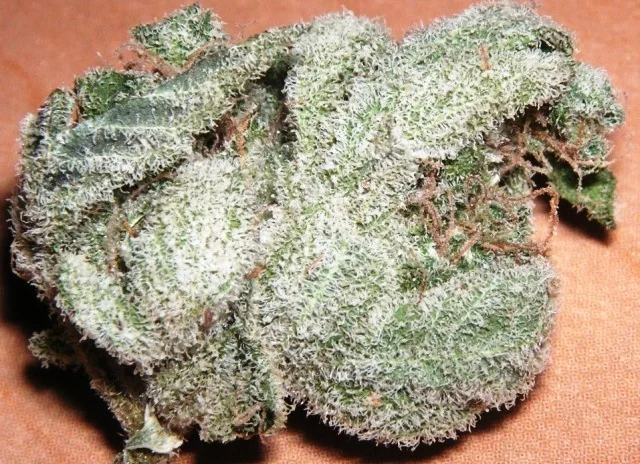
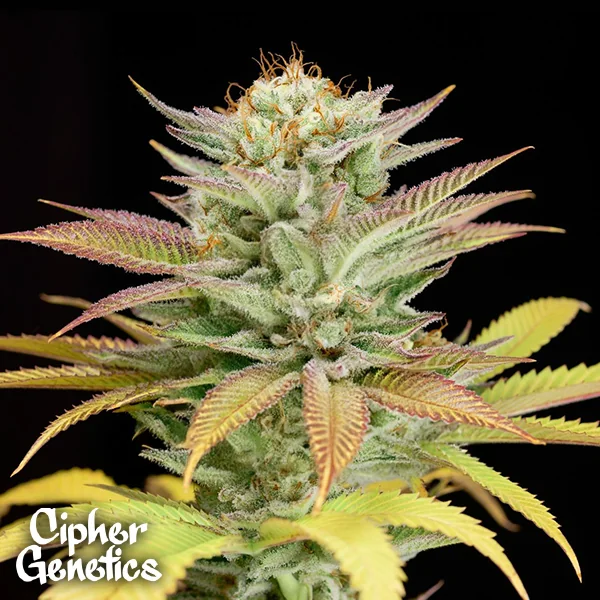
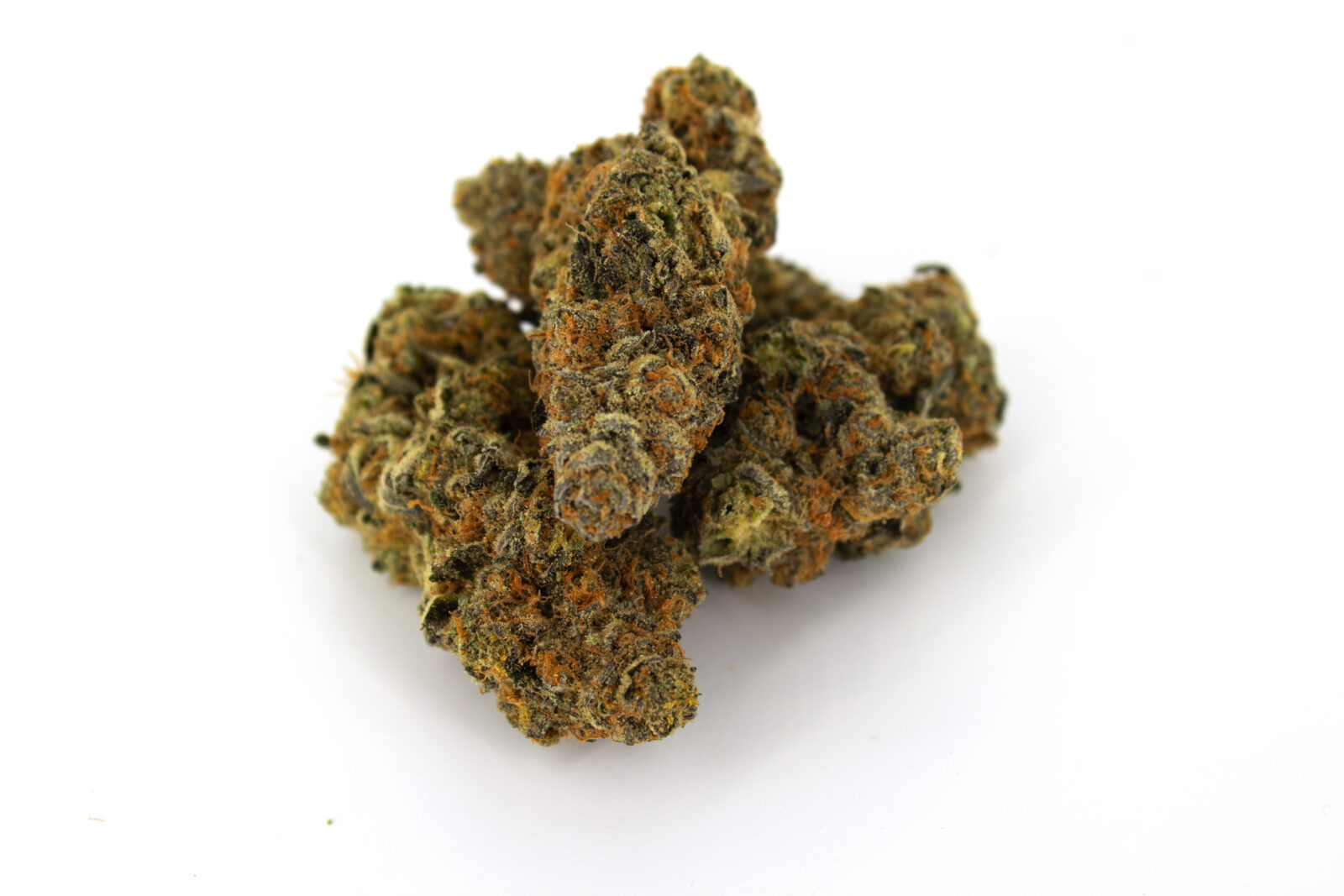
Described visual traits include purple, white, resin and trichomes.
A cultural name and a breeder record
Purple Haze shares its name with Jimi Hendrix's 1967 song. White Label explicitly describes its release as named after the song, while Leafly places the strain in that broader cultural association. The musical reference explains the name's familiarity; it does not date the creation of every cannabis variety carrying it.
For a concrete breeder record, White Label identifies Purple Thai and a Haze variety as parents. Leafly gives the same pairing with more cautious wording. The two sources support recording that lineage as reported, while retaining the breeder version when one is known.
Purple coloration and flower form
White Label describes long flowers with purple coloration and a comparatively manageable plant form within the Haze family. Leafly also notes lavender-toned buds. This color association is central to the strain's name, but it should not become a requirement that every photograph show uniformly purple flower.
A useful photograph identifies its specimen and breeder where possible. The cited White Label description belongs to that release, so a photograph from another source should retain its own attribution instead of being presented as an example of the breeder's exact plant.
Berry earth and a tangy Haze profile
The references overlap on berry and earthy descriptions. White Label describes a sweet-and-tangy scent, and Leafly adds a spicy edge. Those sensory descriptions give readers a more useful point of comparison than the purple name alone.
White Label makes a further distinction between its growing plant’s sweet, tangy scent and the more earthy, pungent berry aroma of the finished flowers. Leafly’s reader categories include floral notes. The accounts emphasize different parts of a berry-and-earth profile instead of describing purple coloration as a flavor in itself.
Related strains
Blue Burst is another documented cross involving Purple Thai. Its parent pair is Purple Thai × Afghan. Its flavor description includes sweet, fruity and sour. The separate Blue Burst profile lists THC at 27–31%. That differs from the 26% range documented for Purple Haze.
Questions about Purple Haze
Is Purple Haze indica or sativa? It is classified as a sativa dominant hybrid. The listed split is 85% sativa and 15% indica.
What does Purple Haze taste like? The available description includes grape, spicy and sweet.
Image credits & editorial sources
Community reviews
Experiences shared here are personal reports. Every review is moderated.
No published reviews yet. Have experience with this strain? Share what you noticed.