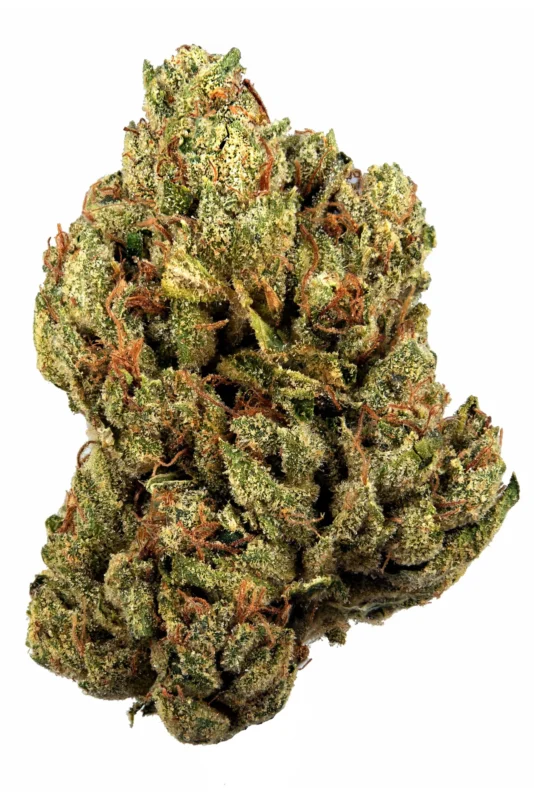
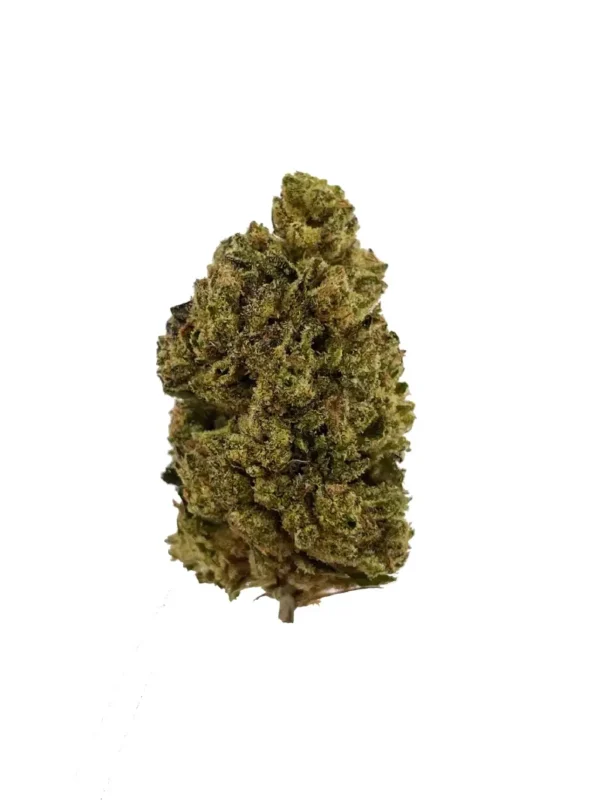
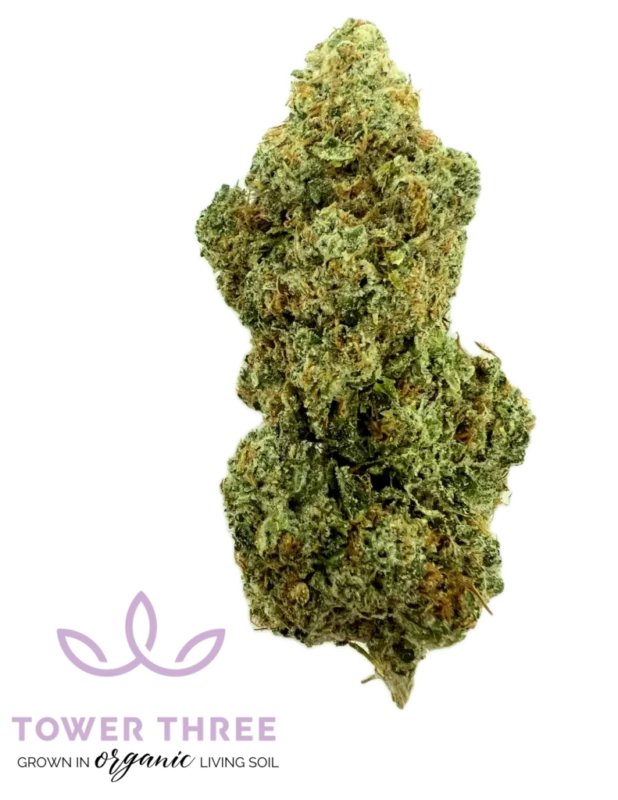
Nebula
Nebula is a hybrid. Its flavor notes include sweet, berry and honey.
Updated
Strain at a glance
- Reported type
- Hybrid
- Reported THC
- 18%
- Reported CBD
- 1%
View the classification diagram

Classification is conventional. Cannabinoid measurements vary by batch.
- Reported flavors
- Berry, Honey, Sweet
- Reported effects
- Creative, Euphoria, Focus, Happy, Relaxing, Uplifting
Nebula genetics
The parent strains have not been established in the available information.
The conventional classification is 50% sativa and 50% indica.
Flavor and aroma
Nebula combines sweet, berry and honey in its flavor profile.
The aroma adds floral and skunky.

Nebula effects
Reported Nebula effects include creativity, euphoria, focus, a happier mood, relaxation and uplift.
Nebula THC level and CBD
The published Nebula THC level is 18%.
CBD is listed at 1%.
For a specific product, use its batch laboratory results rather than treating these figures as universal strain specifications.

Related strains
Explore the hybrid directory for other profiles in this classification.
Questions about Nebula
Is Nebula indica or sativa? It is classified as a hybrid. The listed split is 50% sativa and 50% indica.
What does Nebula taste like? The available description includes sweet, berry and honey.
Who bred Nebula? Paradise Seeds documents its named Nebula selection and publishes a six-plant grow account. Its current component description includes a partly undisclosed Nebula Cut, so a complete authenticated original pedigree is not established by that wording. See the Paradise Seeds Nebula page, checked on 13 November 2026.
Sources for Nebula
Profile updates2
Profile text updated.
Profile text updated.
Image credits & editorial sources
About Nebula
Nebula is Paradise Seeds' honey-sweet, fruit-scented hybrid, described through compact indoor growth and an initially energetic experience with a later relaxing element. The producer's page includes a six-plant grow by The Doc, giving concrete observations of flowering height, timing and individual flower weights. Its current summary and older embedded account do not give identical potency figures, and the catalog's broad discussion of stretch differs from the modest extension seen in that grow. Those distinctions make the reference more useful when they remain visible rather than being compressed into one universal specification.
Nebula strain information and the Paradise Seeds release
The Paradise Seeds Nebula page and embedded grow report, checked on 13 November 2026, identifies its named producer selection. The product description and report concern that documented release rather than authenticating all products bearing the Nebula name.
The producer calls it 60% sativa and 40% indica. The broader Hemp Lookup record retains an unnumbered hybrid classification. The new account adds a specifically attributed description without rewriting the original type fields as though every source had been reconciled.
The original facts, publication history and source date remain separate from this new check. Public release attribution also does not establish independently verified operator identity, exact parental accessions or the provenance of an unknown plant sold elsewhere.
Nebula genetics and the partly undisclosed cut
The current Paradise Seeds description names Afghan Skunk × Nebula Cut. The second component is itself a named cut, rather than a disclosed full ancestry. The checked page does not explain that cut's exact parental background or provide an accession identifier.
That wording should therefore remain a producer account with an unresolved component. It does not supply a complete original pedigree for every historical Nebula selection, nor justify expanding Afghan Skunk into independently authenticated named parental specimens.
The source associates different traits with the components, but does not present experiments isolating their contributions. Its conventional 60/40 category also is not a measured genomic fraction calculated from the two names. The broader profile's originally empty raw lineage field remains unchanged rather than being filled through an automatic inference.
The product's stretch warning and the observed group
The catalog describes Nebula as capable of substantial extension and suggests managing height where necessary. Its compact summary nevertheless places height below a meter.
The six-plant report begins flowering with plants around 50–60 centimeters and ends with them around 80–90 centimeters. The grower describes that extension as relatively modest and the final size as suitable for an indoor space.
Those statements should remain in their contexts rather than making the source appear perfectly uniform. The catalog is a general expectation; the grow is an observed group under a particular method. It does not establish the maximum height or stretch of every Nebula seed under longer vegetative periods or other environmental conditions.
Six Nebula seedlings and the four-week early stage
The Doc sowed six seeds, all of which sprouted in the account. The cultivation data describes four weeks of vegetative development including germination, followed by flowering.
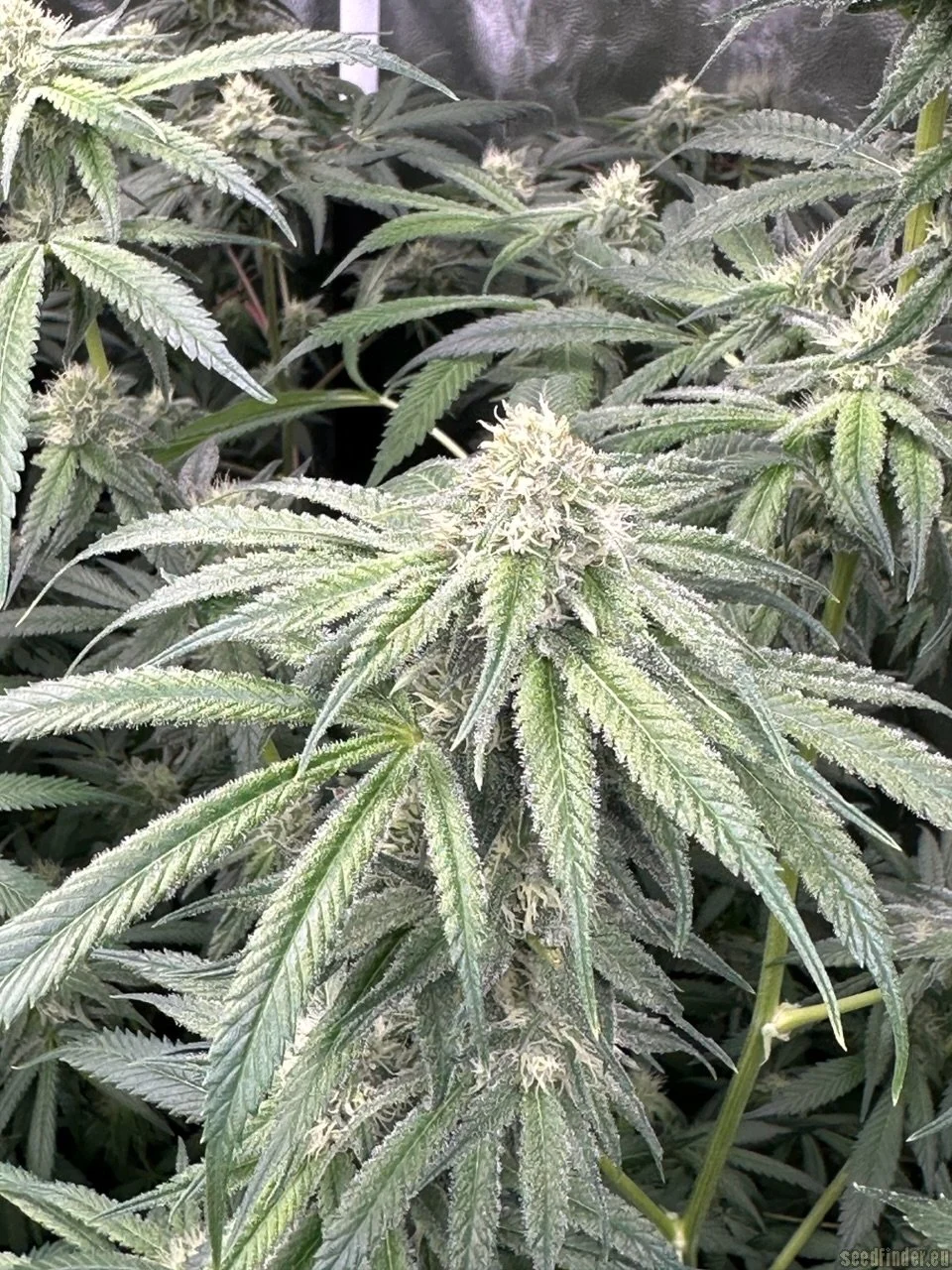
The plants grew in soil under a 600-watt high-pressure sodium lamp. At the beginning of flowering, they were approximately 50–60 centimeters tall, with moderate branching and dark green leaves.
The six successful seedlings are useful observations without establishing a population-wide germination guarantee. The report does not provide a large replicated seed trial or independent authentication of the grower's identity. Its concrete contribution is the group actually described, its early duration and its condition at the flowering transition.
The recorded medium and environmental conditions
The cultivation table identifies Plagron Standard Mix soil, daytime temperatures around 24–28°C and nighttime temperatures around 16–18°C. Relative humidity is listed in a 50–70% interval.
It gives solution pH around 6–7 and describes electrical conductivity only as up to 1, without a complete stage-specific series. The source also identifies nutrient products and an additive used during the grow.
Those figures are contextual details, not a validated universal formula for Nebula. The account does not isolate their effects through matched plants or demonstrate an optimum for every environment. The stated humidity range also should not become a finished-product safety assurance or a substitute for an actual contaminant panel.
Nebula's flowering height and moderate extension
The reported final heights fall in an 80–90-centimeter interval. The source does not publish six separate height values, so an exact mean, median or individual stretch sequence cannot be calculated.
The 50–60-centimeter starting interval and 80–90-centimeter final interval show that the plants extended during flowering while staying relatively short. Those unpaired ranges should not be converted into six invented individual stretch ratios.
The result gives a concrete example of Nebula's architecture under the described four-week early stage and indoor lighting. It does not establish the size of a plant grown with a different container, a longer pre-flowering period or outdoor conditions. The catalog's broader warning about possible extension retains its separate scope.
Flowers, resin and the high-light description
The report describes densely packed flower clusters with conspicuous hairs and increasing resin coverage. Its final flowers were compact and substantially coated in visible resin.
The source emphasizes a preference for strong lighting and claims that extra light can improve production. The documented grow, however, does not include matched lower-light and higher-light groups that would quantify that response.
The useful evidence is the described Nebula plants under a stated 600-watt setup, alongside an attributed producer recommendation. Dense flowers and visible resin are appearance observations rather than independent measurements of cannabinoid concentration, extraction recovery or a universal light requirement. The report does not supply a full light-intensity map for the individual canopies.
Nebula flowering time: weeks and day fields
The product description gives an indoor flowering interval of eight to nine weeks, while its summary and the cultivation table give approximately 60–65 days. Eight to nine complete weeks correspond to 56–63 days by calendar arithmetic.
The forms overlap but are not identical. The report describes the plants as ripe after eight to nine flowering weeks without giving a separate exact cutting day for each of the six individuals.
Using the four-week early stage as 28 days and adding the table's 60–65 flowering days gives approximately 88–93 days across those stated stages, by arithmetic. That is not a separately published exact seed-to-harvest total. Because germination is explicitly included in the early stage, adding an extra germination period again would double-count part of the source's chronology.
The four-week early stage came before flowering and explicitly included germination in the cultivation data. Drying occurred later. The evidence therefore does not support treating 60–65 days as a seed-to-cured-flower total or reconstructing six precise harvest dates from the source's broader intervals.
The six individual flower weights
The report gives dried yields between 23 and 28 grams per Nebula plant. It does not publish all six individual values, so the midpoint of the range should not become a newly claimed measured average.
Likewise, multiplying a guessed average by six would construct an unsupported exact total. The useful observation is the stated individual interval under the reported indoor method.
The source does not assign the six plants a measured canopy area or state their exact spacing. Their flower weights therefore cannot independently verify an area-based catalog figure or produce a defensible grams-per-watt comparison. The account remains informative without turning incomplete allocation information into a performance score.
The Sea of Green suggestion and its denominator
Paradise Seeds recommends a closely packed Sea of Green approach and mentions approximately ten Nebula plants per square meter. It associates that suggestion with a potential yield up to 500 grams per square meter.
That is a producer recommendation and expectation, not the stated planting density of The Doc's six-plant report. The source does not establish that the documented group occupied exactly six-tenths of a square meter.
Keeping that distinction prevents the individual 23–28-gram weights from being multiplied by a density from a separate recommendation and presented as a measured area yield. The architecture may make the method worth discussing, but the checked account does not supply a controlled comparison ranking it against other training or spacing systems.
Other media and what the grow actually tested
The producer says Nebula can perform in soil, coco and hydroponic settings. The embedded grow specifically used soil, with its named medium and nutrient products.
The report therefore does not independently compare the three media or quantify how the same genotype would perform in each. A catalog statement about versatility remains an attributed expectation rather than three completed experiments.
The distinction also matters when interpreting yield and nutrient figures. Results from the documented soil grow should stay with that method rather than becoming universal inputs or outputs for a different system. The page supports useful discussion of options while leaving direct comparative performance unmeasured.
Outdoor Nebula and the two seasonal windows
The main product description gives an early-October outdoor harvest window. The embedded report's discussion instead mentions mid-October in Holland and emphasizes the need for a sufficient flowering period before frost.
Those are related regional statements, not one exact universal date. The source also recommends sunny locations and describes adaptability to temperate climates, while emphasizing a strong light supply.
The six documented plants were grown indoors. They do not independently validate the outdoor timing or the stated 750-gram outdoor yield per plant. A regional producer expectation should not be transferred automatically to every latitude, hemisphere or year, or presented as a measured result from the indoor group.
The 500-gram indoor expectation and the separate outdoor claim
The current product text gives an indoor yield around 500 grams per square meter and an outdoor yield of 750 grams per plant. A compact summary badge also uses a 500–550-gram range without restating the complete denominator there.
These are different settings and units. Nebula's individual indoor weights should not be compared directly with an outdoor per-plant expectation or an area-based indoor figure without the missing allocation details.
The producer's broad high-yield description also is not a measured average derived from the six-plant account. The checked page offers a catalog expectation and an observed group, which can both be useful when their scopes remain visible rather than being blended into one guaranteed specification.
A concrete comparison with the reported Wappa grow
The same producer separately publishes a grow report for Wappa. Its described early stage also lasted four weeks, with plants around 50–60 centimeters before flowering and roughly 120 centimeters at the end.
Nebula's reported group began flowering in a similar height interval but finished around 80–90 centimeters. That makes a useful comparison between published observations, without proving that genetics alone caused the difference.
The two accounts used different described growing setups, and Wappa's report identifies eleven-liter pots while Nebula's checked report does not provide a comparable container figure. They are not a matched head-to-head trial. Their distinct flower weights also should not be used to invent a normalized cultivar ranking.
Nebula THC level and the source's two claims
The existing Hemp Lookup Nebula THC level remains 18%, with CBD recorded at 1%. The current Paradise Seeds product summary gives 22% THC, while the older embedded grow discussion repeats a producer potency expectation of 18–20%.
Those are different stated figures rather than six published laboratory results for the six plants. The checked page does not attach an original certificate, complete component table or product-lot identifiers needed for independent matching.
The higher current claim therefore does not silently replace the older record or create a new authenticated range. It cannot be relabeled as measured THCA. The original 1% CBD field also is not independently established for the reported grow, so its existing provenance remains separate.
Honey sweetness, fruit and the terpene description
The producer emphasizes a honey-sweet scent and fruity character, and the grower similarly describes sweet, fruit-led dried flowers. The page associates Nebula with a honey-themed nickname in that sensory context.
That does not establish honey as an ingredient or a sugar-content measurement. It is a reported impression of aroma and flavor, adding specificity to a broad sweet or fruity description.
The current text names caryophyllene, beta-pinene and terpinolene in its terpene account. No quantitative results for the six plants accompany the checked page, so the names remain attributed producer descriptions rather than exact measured percentages or proof that a particular parent supplied each compound. Sensory language and chemical analysis remain distinct forms of evidence.
Resin-rich appearance and the missing analytical panels
The report describes substantial visible resin and an appealing dense flower structure. These observations help explain Nebula's appearance without identifying the composition of an unknown finished product.
The checked account does not attach contaminant tests, individual cannabinoid panels or measured terpene results for each of the six plants. Missing information cannot become zero, a passing test or an independently established safety certificate.
The same limit applies to a product-specific legal conclusion. A cultivar name and a producer's potency description do not establish the chemistry, identity or jurisdictional status of a current lot. The grow remains useful cultivation evidence without being presented as something broader than the source actually documents.
Nebula effects and the scope of the reference
The producer and grower describe an initially energetic or cerebral experience followed by some bodily relaxation. The source also uses more dramatic experiential language, but provides no controlled exposure, fixed duration or clinical trial.
The conventional 60/40 category does not determine a measured proportion of mental and physical effects. Nor does a favorable description of clarity establish normal functioning during intoxication or the same response for every person.
The informative Nebula account remains the specifically credited Paradise selection and the six plants actually described: moderate observed extension, compact final heights, individual flower weights and a honey-sweet fruit character. Its partly undisclosed pedigree, timing differences and potency claims retain their limits while the older facts keep their provenance.
Community reviews
Experiences shared here are personal reports. Every review is moderated.
No published reviews yet. Have experience with this strain? Share what you noticed.