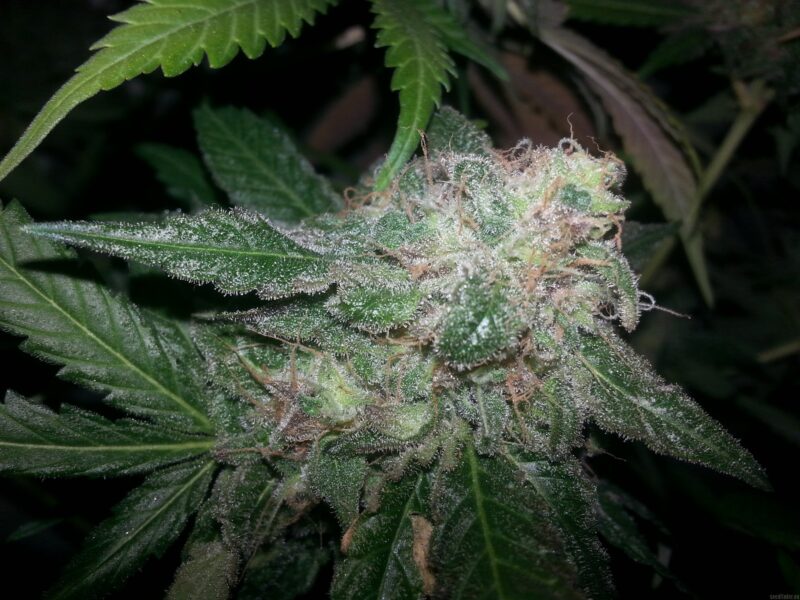
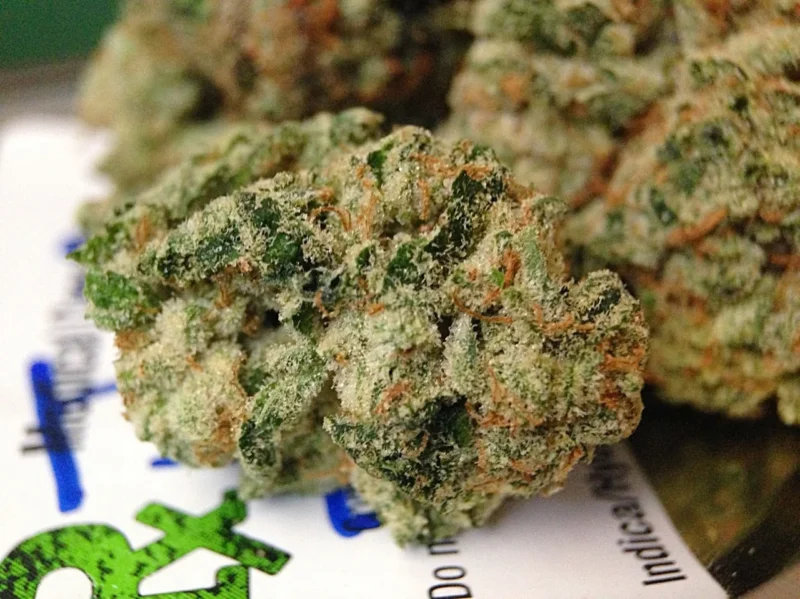
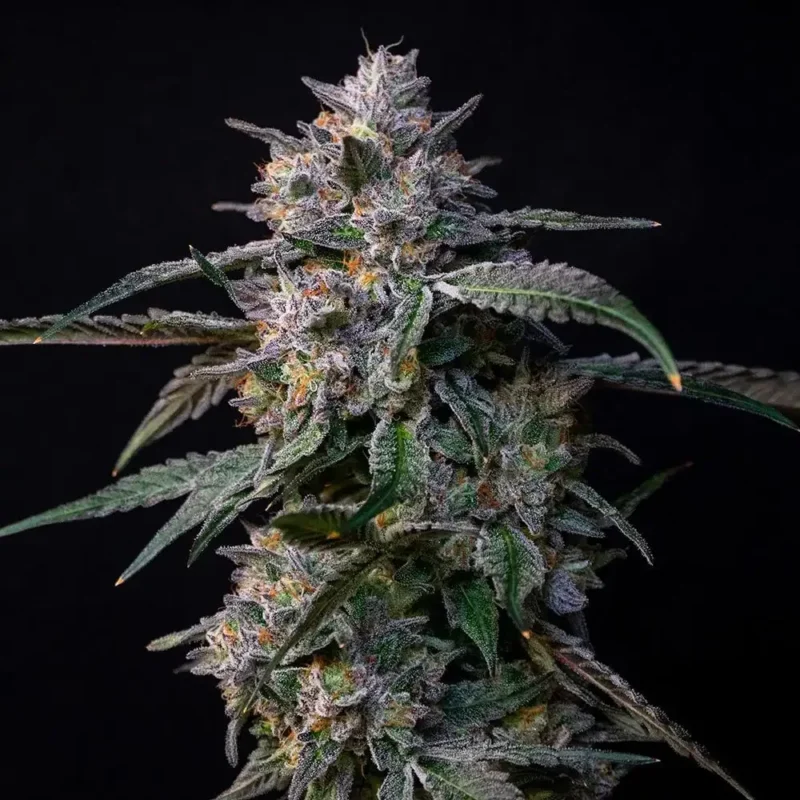
Wappa
Wappa is an indica dominant hybrid. Its flavor notes include pine, lime and lemon.
Updated
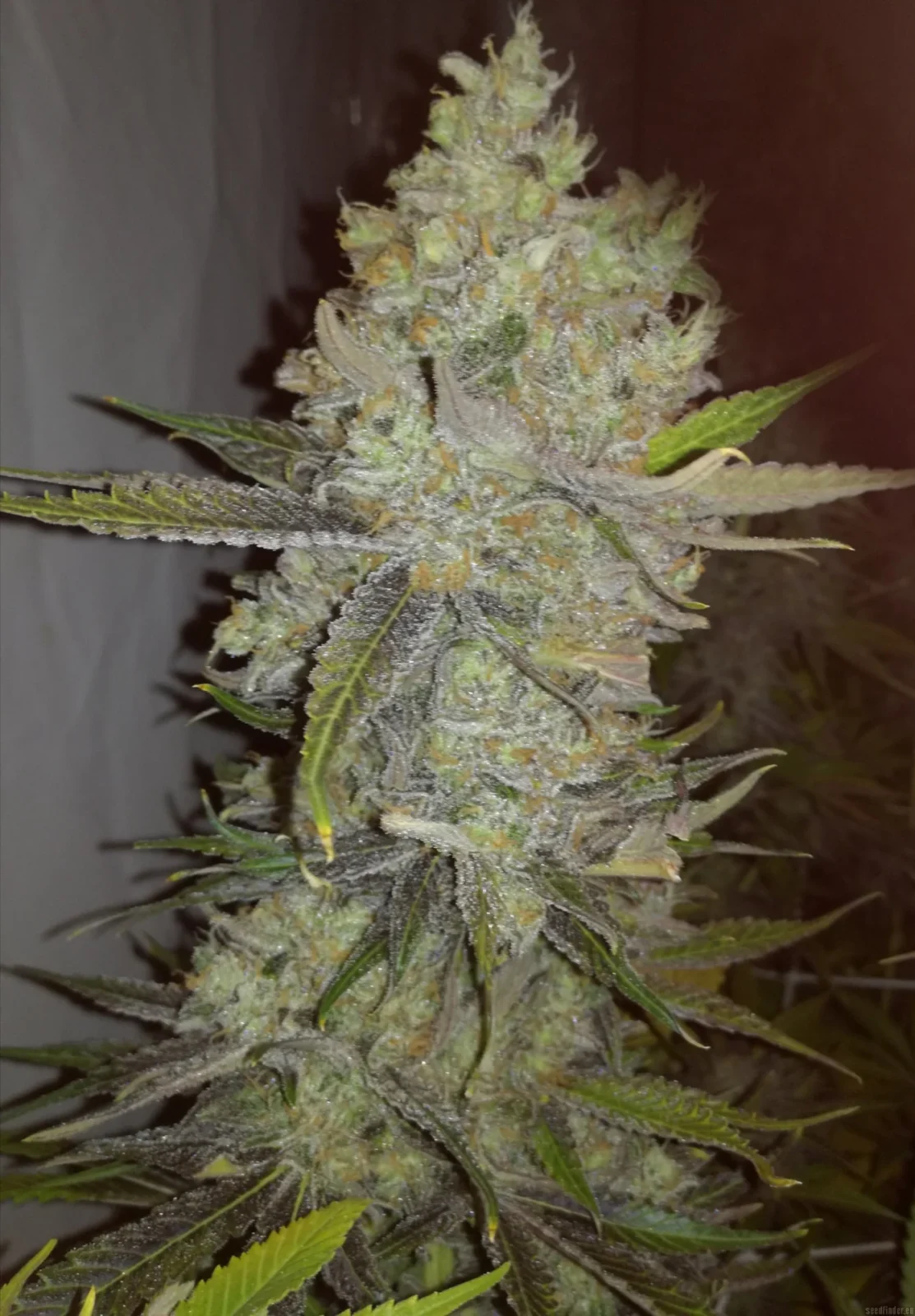
Strain at a glance
- Reported type
- Indica dominant hybrid
- Reported THC
- 18%–19%
- Reported CBD
- Not reported
View the classification diagram

Classification is conventional. Cannabinoid measurements vary by batch.
- Reported flavors
- Citrus, Fruity, Lemon, Lime, Pine, Sweet
- Reported effects
- Body High, Euphoria, Happy, Hungry, Relaxing, Sleepy
Wappa genetics
The parent strains have not been established in the available information.
The conventional classification is 40% sativa and 60% indica.
Flavor and aroma
Wappa combines pine, lime, lemon and sweet in its flavor profile. Additional notes include citrus and fruity.
The aroma follows the same lime, lemon, sweet and fruity direction.

Wappa effects
Reported Wappa effects include body sensations, euphoria, a happier mood, increased appetite, relaxation, sleepiness and sociability.
Wappa THC level and CBD
The published Wappa THC level is 18–19%.
CBD has not been documented for this profile.
For a specific product, use its batch laboratory results rather than treating these figures as universal strain specifications.

Related strains
Explore the indica dominant hybrid directory for other profiles in this classification.
Questions about Wappa
Is Wappa indica or sativa? It is classified as an indica dominant hybrid. The listed split is 40% sativa and 60% indica.
What does Wappa taste like? The available description includes pine, lime and lemon.
Who bred Wappa? Paradise Seeds describes developing Wappa through repeated selection in its breeding program. The exact pedigree remains undisclosed, with sweet-skunk influence described rather than authenticated named parent accessions. See the Paradise Seeds Wappa product page and grow report, checked on 13 November 2026.
Sources for Wappa
Profile updates2
Profile text updated.
Profile text updated.
Image credits & editorial sources
About Wappa
Wappa is Paradise Seeds' compact, fruit-scented hybrid, developed through repeated selection for substantial, vigorous plants. Its exact pedigree remains undisclosed, but the producer identifies a sweet-skunk background and describes strawberry and cherry impressions alongside sturdy branching. The current product page is especially useful because it includes two different kinds of cultivation evidence: a 48-plant trial summary and a separate three-plant grow by The Doc. Their pot sizes, yields and growing methods should remain distinct. Together they provide more context than a single height, potency or yield figure could convey.
Wappa strain information and the Paradise Seeds attribution
The Paradise Seeds Wappa product page and embedded grow report, checked on 13 November 2026, explicitly describes the company's breeding and selection work. This supports a direct producer attribution for the documented release.
The page gives a conventional classification of 60% indica and 40% sativa, matching the broader Hemp Lookup record. Those percentages remain producer categories rather than a measured genomic composition or a numerical formula for effects.
The original profile's facts and source date remain intact. The checked page adds separately dated evidence about the named selection without establishing that every product bearing Wappa's name has the same provenance. Public attribution also remains separate from independently authenticated operator identity.
Wappa genetics and the deliberately undisclosed pedigree
Paradise Seeds says Wappa's exact lineage remains partly secret. It identifies substantial sweet-skunk influence, while describing further blending and selection within its breeding program.
That wording does not establish a specific named Skunk accession, a complete pair of parents or a cross with a cultivar simply called Sweet Skunk. The broader profile's previously empty lineage field therefore should not be filled by turning descriptive language into an authenticated pedigree.
The producer's account does establish a stated selection goal: choosing large, vigorous plants across generations to build the Wappa profile. It does not provide the number of generations, exact parental specimens or independently measured genetic uniformity. Those missing details remain unknown rather than being inferred from the cultivar's reputation or a small grow report.
The catalog's compact description and the observed plants
The product's summary badge describes Wappa below a meter, while the text calls it stout, sturdy and bushy. Its flowering structure is described through a substantial main cola, productive side branches and a relatively favorable flower-to-leaf ratio.
The embedded three-plant report instead finishes around 120 centimeters per plant. That difference should stay visible rather than reducing the grow's measured height to fit the badge or silently rewriting the entire catalog description.
The reported plants had four weeks of vegetative development and eleven-liter containers. Those conditions differ from the separate trial summary and provide context for the larger final size. The source does not measure the same plants under shorter schedules, so compactness remains a broad producer description alongside the actual reported outcome.
The reported width and flowering headroom
The Doc's Wappa plants were already more than forty centimeters wide during their third vegetative week, before the final flowering stretch. The source later describes further expansion in width as well as height. This is useful context for the bushy label: a plant's floor footprint can become substantial even while its main stem is still relatively short.
At the light change, heights were around 50–60 centimeters; the final plants were approximately 120 centimeters. Comparing those stage figures gives a final height roughly two to 2.4 times the earlier interval. That is arithmetic based on reported ranges, not three individually measured stretch factors.
The account does not give a final width or an exact canopy allocation. The three-plant grow's spacing therefore should not be reconstructed from the separate trial density of 6.4 plants per square meter. Its useful contribution is the observed combination of early lateral development and continued flowering extension.
Wappa's 48-plant trial summary
The page describes a trial with 48 plants, an average yield of 133 grams per plant, a density of 6.4 plants per square meter and seven-liter pots. It reports an area-based result of approximately 850 grams per square meter.
Multiplying the stated average weight by the stated density gives 851.2 grams per square meter, close to the rounded 850 figure. That arithmetic checks the relationship between the two summaries; it is not a new independently measured harvest.
The source does not publish the individual plant weights, spread of results or full experimental method in this summary. The stated mean therefore should not imply that every Wappa plant yielded exactly 133 grams, or establish the same outcome for another room, density or container size.
The trial, the catalog and the separate grow
The page also gives a general indoor yield of 550 grams per square meter and an outdoor yield of 700 grams per plant. Its summary badge uses 500–550 grams without repeating the full context there.
Those producer expectations are distinct from the 48-plant trial's reported mean and from The Doc's three-plant harvest. The page does not establish one universal yield figure covering all of those conditions.
Keeping the denominators is particularly important: grams per square meter and grams per plant answer different questions. The reported 850 area-based trial result should not become an outdoor individual-plant promise, while the outdoor 700-gram figure is not a measured average from the indoor trial. Wappa's page offers several observations and expectations rather than one interchangeable specification.
The Doc's three Wappa seeds
The embedded report describes a grower identified as The Doc germinating three feminized seeds. All three sprouted in that account. The young plants spent their first two weeks under two 125-watt compact fluorescent lamps.
The grower transplanted them into eleven-liter containers filled with Plagron Standard Mix. This is a different container size from the seven-liter pots in the 48-plant trial summary, so the two datasets should not be merged.
Three successful seedlings are a useful observation but not a population-wide germination guarantee. The report does not independently authenticate the grower's identity or publish a replicated packet trial. Its value lies in the described plants and method, not a claim that every Wappa seed performs identically.
Vegetative development and the larger lighting setup
After the first two weeks, the source describes replacing the fluorescent lights with two 600-watt lamps and one 400-watt lamp. That combined setup totals 1600 watts by arithmetic, but the report does not define how much of the lighting area was allocated to these three plants.
At the end of week three, Wappa's plants measured approximately 30–40 centimeters tall and already more than forty centimeters wide. The source describes side branches extending from beneath large leaves and a consistently bushy outline.
By the end of week four, heights were around 50–60 centimeters. Those observations provide a concrete vegetative frame for the later flowering result. They do not establish daily growth rates, individual height histories for each plant or an isolated causal effect of the lighting change.
Wappa's flowering transition and branch extension
The Doc changed the light period from eighteen hours to twelve hours after four weeks of vegetative development. The source also describes replacing the established lamps with a flowering configuration using two 600-watt units and one 400-watt unit.
Visible flower clusters appeared at the tips after about two weeks of flowering. Side branches continued extending while the plants increased in both height and width, rather than remaining at their pre-flowering dimensions.
After four flowering weeks, the report describes plants around a meter tall with increasingly substantial flowers. By the end, each was approximately 120 centimeters. These are stage-based observations of the three-plant grow, not a universal stretch multiplier or a precise ceiling for every Wappa plant.
Flower development and the observed similarity
The report describes flowers becoming larger and denser after the fifth flowering week, with substantial resin visible on the buds. The three plants were described as similar in structure, flowering form and fruity aroma.
The grower nevertheless noticed one plant with more conspicuous resin than the other two. That observation matters: a favorable impression of uniformity does not mean the source documented absolutely no variation.
The small group also cannot establish a measured genetic stability rate across the whole Wappa population. Its useful contribution is the reported similarity of these three plants under one method, alongside the specific difference the grower noticed. Visible resin coverage remains an appearance observation rather than proof of cannabinoid concentration.
Wappa flowering time: the product and The Doc's harvest
The current summary gives approximately 55–60 flowering days. The embedded grow describes harvest between the eighth and ninth flowering weeks, which corresponds broadly to 56–63 days by calendar arithmetic.
Those forms are close but not perfectly identical. The source does not give an exact harvest day for each of the three plants, so the interval should remain an interval rather than being converted into three newly precise dates.
The four-week vegetative phase came before flowering. Drying came afterward. Wappa's 55–60-day summary therefore is not a seed-to-finished-flower total, and the source does not provide enough exact dates to reconstruct a complete daily chronology from germination through the final tasting.
The 312-gram total and what it means
After drying, The Doc reported 312 grams from the three Wappa plants together. The source's cultivation table explicitly presents that figure as a total, not a per-plant weight.
Dividing the total by three gives an arithmetic average of 104 grams per plant. That does not establish that each individual yielded 104 grams, because the separate weights are not supplied. It also should not be confused with the 133-gram average in the different 48-plant trial.
The report does not allocate a measured canopy area or the full lamp output to these plants. Its total therefore cannot produce a defensible independent grams-per-square-meter or grams-per-watt efficiency result. The documented harvest remains useful without inventing a performance score.
Comparing the two reported Wappa averages
The separate accounts give an arithmetic average of 104 grams across The Doc's three plants and a stated 133-gram mean in the 48-plant trial. The difference between those summaries is 29 grams per plant, but the source does not hold growing conditions constant between them.
The different container sizes and unknown comparable light allocation prevent that difference from proving that one method was better. The larger trial also lacks individual weights needed to assess the spread of its results. These figures are useful as two attributed observations, rather than a ranking or a prediction of what any one Wappa seed must produce.
Temperature, humidity and the reported medium
The cultivation data gives daytime temperatures around 22–28°C and nights around 18–19°C. Relative humidity is listed at approximately 40–60%, with manual watering.
The source reports solution pH around 6.0–6.5 and different conductivity intervals for vegetative and flowering stages. It also identifies nutrient products and additives used during the grow, rather than describing an input-free plant.
Those conditions provide context for The Doc's Wappa plants. The account does not isolate their individual effects through matched comparisons or establish a universal environmental optimum. Similar inputs elsewhere would not, by themselves, authenticate the same yield, flower composition or product identity.
Outdoor Wappa and the regional climate account
Paradise Seeds describes Wappa as capable of growing in moderate climates, including northern parts of Europe and North America, while emphasizing stronger performance with more sunshine in southern regions.
That is a producer climate description rather than a documented multi-location outdoor trial on the checked page. The indoor report does not independently test those regional claims.
The stated outdoor yield of 700 grams per plant should retain that broad catalog scope. It is not a measured mean from The Doc's indoor plants or the separate dense trial. Local growing seasons, individual plant size and the precise environment remain unmeasured variables in any comparison with the reported indoor examples.
Wappa THC level and the current product claim
The existing Hemp Lookup Wappa THC level remains 18–19%, with CBD undocumented. The current Paradise Seeds summary instead gives a THC potency figure of 24%.
The checked page does not attach an original certificate, complete analyte table or identified product lot supporting independent matching. The higher number remains a producer claim about the selection rather than an automatic replacement for the older range or a universal maximum.
The three-plant grow's description of strong effects and visible resin does not authenticate the 24% figure independently. It also cannot be relabeled as measured THCA. Missing CBD remains unknown, and no absent contaminant result becomes a passing test or a product-specific safety verdict.
Strawberry, cherry and the sweet-skunk background
The product page describes a fresh fruit-led bouquet with strawberry and cherry impressions. Its broader sweet-skunk background provides another part of the producer's sensory account rather than a complete disclosed pedigree.
The Doc describes a sweet, fruity aroma shared by the three plants and a similarly sweet flavor in the dried flowers. These observations complement the broader Wappa entry without implying that every individual expresses the same intensity or exact balance.
Paradise Seeds names myrcene, caryophyllene and linalool in its terpene description. The checked page does not publish a quantitative panel for the reported plants. Those compounds remain attributed source descriptions rather than exact measured percentages or proof of which parent supplied a particular sensory impression.
Wappa effects and the grower's account
The producer describes relaxation with an uplifting element, and The Doc reports pronounced bodily relaxation alongside euphoria. These are experiential descriptions rather than controlled measurements of response.
The report uses favorable language about remaining mobile and mentally present, but it does not establish normal functioning during intoxication or guarantee freedom from sedation. Nor does the page's mention of medical users provide a cultivar-specific clinical trial or a treatment claim supported by this grow.
The useful Wappa account combines its expressly credited producer, undisclosed exact pedigree, sturdy branching and fruit-led sensory character with two clearly separated cultivation datasets. The observed plants, catalog expectations and potency claim retain their own scope, giving the cultivar detailed context without making the evidence appear more complete than it is.
Community reviews
Experiences shared here are personal reports. Every review is moderated.
No published reviews yet. Have experience with this strain? Share what you noticed.