
Moweeto
Moweeto strain information: AllBud classifies this cannabis entry as indica dominant hybrid, with THC 25–26% and CBD not reported. AllBud names Lemon Tree × Velvet Moon as its reported lineage. The source’s flavor tags include candy, citrus, fruity, lemon and sour. This profile separates reported traits from batch-specific measurements.
Sources checked
On this page
Have a photograph of your own specimen? Add it with your review
Strain at a glance
- Reported type
- Indica dominant hybrid
- Reported THC
- 25%–26%
- Reported CBD
- Not reported
Source-reported indica/sativa proportions.
Reported ranges describe the source record, not a tested sample. Potency and composition can vary by grower and batch. Credits & sources.
Moweeto strain reference

What type of strain is Moweeto?
Moweeto strain information: AllBud classifies this cannabis entry as indica dominant hybrid, with THC 25–26% and CBD not reported. AllBud names Lemon Tree × Velvet Moon as its reported lineage. The source’s flavor tags include candy, citrus, fruity, lemon and sour. This profile separates reported traits from batch-specific measurements. This classification groups the record with other indica dominant hybrid entries in the directory. It describes the source’s category, rather than a measured effect. Classification alone cannot establish the chemical composition or predict a particular person’s experience with a sample.
Reported THC and CBD
The catalog source reports THC at 25–26%. A CBD measurement is not recorded for this entry. These figures describe the source record, rather than a laboratory result for a particular flower. Growing conditions, harvest and testing methods can change the measured cannabinoid content of a sample. The reported THC interval spans 1 percentage points. Read that interval as the values attributed to this named source record; it does not establish the potency of every product carrying the name.
Identity and source notes
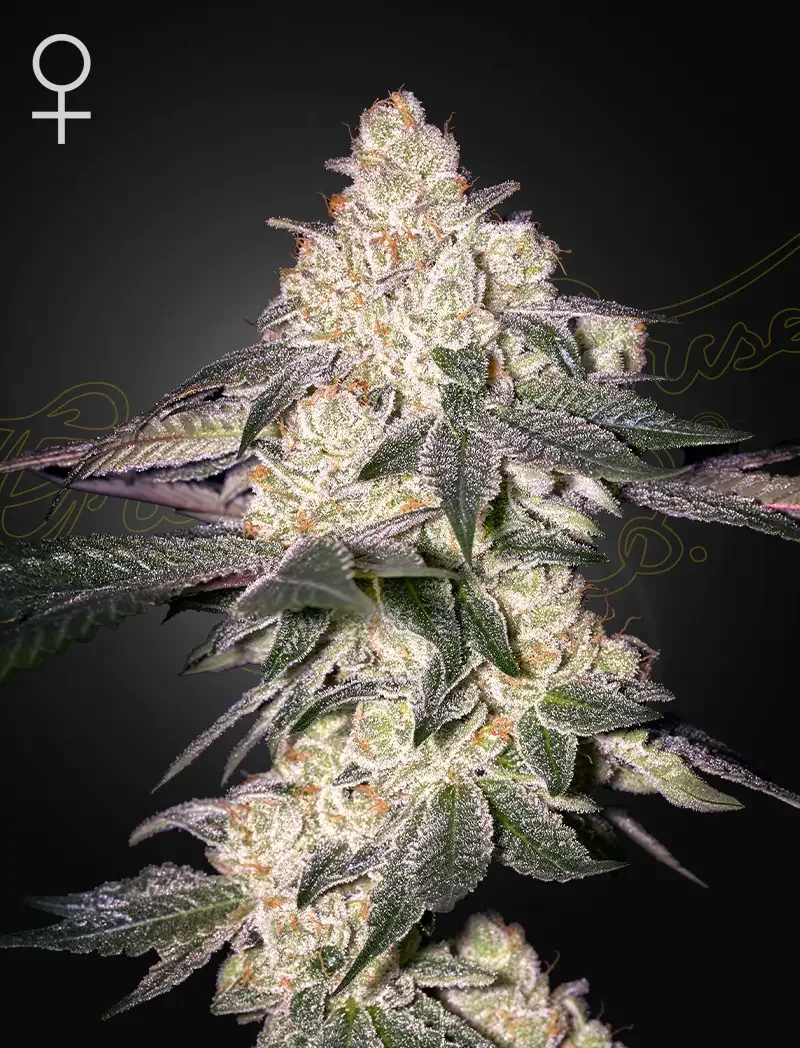
Reported parentage: Lemon Tree × Velvet Moon The featured photograph is labeled “Moweeto (source product identification)” by its source. It illustrates that contributor-identified specimen.
Identity & lineage
- Reported parents
- Lemon Tree × Velvet Moon
Sources [1]
Moweeto strain information: identity and lineage
AllBud names Lemon Tree × Velvet Moon as its reported lineage. That statement is the starting point for reading Moweeto as a named catalog record. A lineage claim describes the relationship reported by the source; it does not independently authenticate an unidentified flower or establish that every product carrying the name comes from the same selection. The source link remains attached so the wording can be checked against the original account rather than treated as an unsupported directory assertion.
Moweeto should be matched to another listing using the full identifying details available, not just a familiar word within its name. Parent names, an attributed selection description, the source’s classification and any documented breeder release all answer different parts of that identity question. A missing detail remains missing here. Filling an unknown parent or breeder field with a plausible family name would make the profile appear more complete while making the actual evidence less clear.
No alternate name has been added to the Moweeto alias field from the extracted reference information. This does not establish that other names are impossible; it keeps the present identity record limited to supported material. A documented synonym would be a useful future addition, especially if it explains which breeder release or selection the alternate name refers to. Similar spelling alone is not enough to create that relationship.
Sources [1]
How Moweeto is classified
The imported catalog classifies Moweeto as indica dominant hybrid. Its numeric fields show 40% sativa and 60% indica. These values organize the source record rather than measure a person’s likely experience. A category can be useful for browsing related entries, but it cannot substitute for the chemistry of a specific sample. The same type label can appear on records with different parentage, different reported cannabinoid intervals and different descriptions of aroma or flavor.
The Moweeto classification is retained at the precision supplied by the imported fields. A ratio should not be made more specific by guessing from a name, flavor or photograph. Where a source supplies a conventional indica/sativa split, it remains a source label. It is not a count of active compounds and does not demonstrate how much of an experience will be energizing, relaxing, mental or physical.
When comparing Moweeto with another indica dominant hybrid entry, read the classification alongside the documented identity and the reported cannabinoid information. Matching labels do not make two names interchangeable. Equally, a different label in a separate catalog is a reason to compare the source wording before declaring a contradiction. The question is whether both accounts describe the same identified selection, and whether either explains how it arrived at the classification.
Sources [1]
Reported THC and CBD for Moweeto
The imported Moweeto record reports THC as 25–26% and CBD as not reported. These are values attached to the catalog entry, not a certificate for material currently offered by a particular grower or retailer. A directory can make the source figures easier to find while keeping that distinction explicit. The test result for an identified batch addresses a more specific question than the general record attached to a strain name.
The reported Moweeto THC interval spans 1 percentage points. That width describes the endpoints shown in the source record. It does not provide a sample count, the frequency of values between the endpoints, a measured average or a guarantee that every flower using the name falls inside the interval. A midpoint can be calculated, but it would be an arithmetic summary rather than evidence of a typical tested sample.
The CBD information for Moweeto needs its own reading. A reported CBD figure should remain attached to the same source context as the THC field. If a measurement is not supplied, the correct interpretation is that the record is incomplete for that compound. It is not accurate to replace the missing field with zero or infer it from the source’s description of effects. Different cannabinoid fields require their own supporting measurements.
For an actual Moweeto batch, compare the product’s identifying details with its laboratory documentation before treating a directory figure as applicable to that sample. The name, classification and flavor description do not establish the result of a chemical test. Likewise, a single sample certificate can improve understanding of that sample without proving a stable concentration for all selections, harvests or products carrying the same strain name.
Sources [1]
Moweeto flavor profile
AllBud’s flavor tags for Moweeto are candy, citrus, fruity, lemon, sour, sugary and sweet. These terms summarize the source’s sensory account. They are useful because they offer more detail than a broad family name or a general category such as hybrid. Read the combination rather than isolating a single word: a source can describe sweet and spicy notes together, or place fruit, herbs and wood in the same profile without implying that one descriptor cancels out the others.
The Moweeto flavor list does not include measured concentrations of the compounds responsible for those impressions. A word such as citrus, pine, cream or spice is a sensory descriptor, not by itself a laboratory identification of a particular terpene. This page therefore keeps the vocabulary descriptive. Assigning a dominant compound or a percentage from flavor words alone would add a chemical claim that the cited tags do not establish.
When reading another Moweeto description, compare both the overlap and the differences in its flavor terms. An account may emphasize one part of the profile while omitting another, and different specimens or selections may be discussed under the same name. An attributed description can add useful context without becoming a universal promise. The most informative comparison identifies which sample or source each set of terms describes, rather than assuming every account should use identical language.
Sources [1]
Moweeto aroma notes and their limits
The source aroma tags for Moweeto are citrus, diesel, earthy, fruity, gas, pungent and sour. Aroma and flavor are recorded separately because they are related descriptions rather than identical fields. A source can emphasize one set of notes in the smell and another in the taste. Keeping both lists visible preserves the detail in the account instead of compressing everything into a single vague label or using the strain name as a substitute for sensory information.
For Moweeto, these aroma words are reported observations, not a quantified ranking. Their order in the source’s tag list does not demonstrate which note is strongest or which compound is most abundant. A more precise chemical description would need an identified sample and appropriate testing. The reference diagram groups the source terms for readability while avoiding numerical proportions that would falsely imply a terpene assay.
An aroma comparison between Moweeto and a related listing is most useful when it names the actual descriptors being compared. Shared words can point to a descriptive resemblance, but they do not verify a shared parent, breeder or selection. Conversely, a difference in vocabulary does not automatically settle identity. Sensory accounts are one part of the source record and should be considered alongside the more specific lineage and provenance information available.
Sources [1]
How to read reported Moweeto effects
The source effect tags for Moweeto include body high, cerebral, creative, euphoria, relaxing and uplifting. These are an attributed account of experience. They should not be converted into a guarantee, a clinical conclusion or a measured scale of intensity. A directory can accurately summarize what the source reports without claiming that all users or all material carrying the strain name will produce the same result. The distinction remains important even when several tags sound consistent with the source classification.
For Moweeto, descriptions concerning mood, mental activity and physical sensation can appear in the same account. They refer to different aspects of a reported experience rather than two sides of a mathematical ratio. An indica/sativa label does not establish equal or unequal quantities of those effects. The source’s cannabinoid figure also does not, by itself, predict the onset, duration or particular subjective character of an unidentified sample.
This Moweeto profile keeps the effect vocabulary separate from its identity and chemistry fields. Lineage is a reported relationship between named plants; cannabinoid figures describe reported composition; effect tags summarize an experience account. None automatically verifies the others. Reading those fields separately makes the record more useful for comparison, because a matching category or similar experience description is not mistaken for proof that two products have the same chemistry or genetic identity.
Sources [1]
Moweeto appearance and visual identification
The extracted Moweeto appearance description includes these terms: fluffy, grape-shaped, forest green, orange, white and trichomes. These are details of the source’s visual account, not a unique identifying code. Similar colors, shapes or trichome descriptions can appear across unrelated entries. The reference preserves them as context while avoiding the claim that a flower can be authenticated from a resemblance to one description or photograph alone.
A photograph attached to a Moweeto profile needs its own provenance: who supplied it, which specimen they identified and what credit or license applies. Those facts are separate from the written catalog’s parentage claim. A caption can explain the contributor’s identification without implying independent genetic verification. The diagrams added here are reference illustrations of reported information, so they should be read as visual explanations rather than evidence that a photographed flower has been authenticated.
Sources [1]
Moweeto compared with Mr. Carter
The Mr. Carter source record is a useful comparison because its classification or reported flavor vocabulary overlaps with this entry. Its catalog type is indica dominant hybrid, and its reported THC is 30–31%. By comparison, Moweeto is classified as indica dominant hybrid, with THC 25–26%. These statements compare published source records, not samples tested under matching conditions. The directory figures should therefore remain attached to their own named entries.
The recorded Mr. Carter flavor tags include apple, berry, citrus, fruity and lemon; the Moweeto account lists candy, citrus, fruity, lemon and sour among its flavor terms. This comparison points to specific descriptive overlap or contrast, rather than declaring two names equivalent. Even a close match in flavor vocabulary would not establish identical parents or a shared breeder release. The source link for each record allows the descriptive comparison to be checked in context.
Use this comparison to distinguish questions about Moweeto from questions about Mr. Carter. A common classification is a browsing connection. A matching parent would be a lineage connection if supported by identifying evidence. A similar aroma is a sensory resemblance. Those relationships can coexist, but one should not be silently substituted for another. Separate catalog records may also describe aliases or selections, so their existence does not by itself prove that the underlying genetics are unrelated.
Moweeto compared with Muffinz
The second comparison is Muffinz, whose source record reports THC as 24–29% and classifies it as indica dominant hybrid. Its flavor tags include berry, blueberry, candy, citrus and fruity. The corresponding Moweeto fields are 25–26% THC and a indica dominant hybrid classification. Looking at these concrete fields is more informative than comparing only the names or assuming that a shared family word settles the relationship between the entries.
The Moweeto and Muffinz potency fields are directory descriptions. They do not establish which of two actual batches would have the higher tested concentration, because the listings do not provide a matched experiment or identify all the material represented by the figures. A narrow reported interval, a wider interval and a single summary number also supply different levels of detail. Preserve those differences rather than turning the comparison into an unsupported product ranking.
If future evidence links Moweeto and Muffinz through a breeder release, an alias or an identified selection, that relationship should be documented explicitly. Until then, the comparison remains a way to read the available classification, chemistry and sensory fields together. It is not a claim of genetic equivalence or difference. This keeps the reference useful for exploring nearby catalog entries while leaving the stronger identity question open to appropriate evidence.
Reading the Moweeto reference diagrams
The Moweeto identity diagram summarizes the documented lineage or selection relationship where one is available. If a complete parent pair is not established, the graphic makes that gap explicit instead of inventing a cross. Its connecting lines and labels visualize the source account; they are not a breeder certificate, genetic test or specimen photograph. This distinction lets the drawing simplify the presentation without suggesting that a new source of evidence has been created.
The Moweeto classification graphic uses the source category and any resolved ratio that the record supports. A conflict or missing ratio is labeled instead of being converted into a precise-looking chart. The sensory graphic organizes reported flavor and aroma words without assigning chemical concentrations. The existing cannabinoid chart serves a separate purpose: it visualizes the imported THC and CBD fields, which remain qualified as source-reported values rather than batch-specific laboratory results.
Together, the Moweeto illustrations provide a quick map of the available record. Their labels matter as much as their shapes: a conventional ratio, a reported cannabinoid range and a group of sensory descriptors are different kinds of information. None should be interpreted as a measured version of the others. The surrounding source notes explain the basis for each graphic and give readers a way to check or challenge the underlying statement.
Sources [1]
Checking the Moweeto source record
This Moweeto guide uses the linked AllBud listing for the strain-specific classification, reported chemistry and sensory tags. The source-check date records when that account was retrieved. It is not a harvest date, a laboratory date or proof that every statement was independently verified. A source can be useful and still contain omissions or internal differences. Keeping the date and attribution visible makes those limits easier to review when the listing changes.
If another Moweeto page disagrees with a value here, first identify the exact field and the type of evidence each page uses. One may quote a source header, another its narrative and a third a result for an identified batch. These statements can differ in scope as well as in their numbers. A useful correction explains that difference and points to the relevant material, rather than assuming every disagreement describes the same sample or editorial choice.
A stronger Moweeto identity record would connect the named cross or selection to original breeder documentation. A stronger chemistry record would identify the tested material and laboratory result. A stronger sensory record would attribute an observation to an identified specimen. Each addition improves a different part of the profile. A photograph, a lineage statement and a certificate can complement one another, but none automatically resolves every open question in the other fields.
Sources [1]
Moweeto strain information: practical questions
Is Moweeto the same as a parent or similarly named entry? The present record does not establish equivalence from a shared word alone. Read the reported lineage or selection description first, then check aliases and source provenance. A parent can explain a family connection without being interchangeable with an offspring. Equally, two separate directory entries can require further investigation before being treated as distinct genetic identities.
Does the Moweeto name establish its legal product category? A strain name or its presence in this directory is not a certificate for a specific product. The record does not determine a batch’s full cannabinoid breakdown, the jurisdiction in question or the compliance documentation attached to that material. The imported THC figure remains a source-reported field. It should not be read as a legal classification or as a guarantee about unidentified products using the name.
What should be checked when a Moweeto measurement is missing? Keep the gap explicit and look for evidence addressing that compound or field. A missing CBD result is not zero CBD, a missing THC result is not zero THC and an absent terpene assay cannot be reconstructed from flavor tags. The appropriate addition is a supported measurement or identified source statement. Guessing from the classification or the reported experience would create precision the record does not have.
Sources [1]
Contributing useful Moweeto observations
A useful reader contribution about Moweeto distinguishes an observation from an identification claim. Describing the aroma or appearance of a specimen is different from verifying its parents. If the material was labeled by a grower or supplier, that provenance can be stated as such. The account becomes easier to interpret when it is clear which details were observed directly, which came from a label and which remain unknown.
For a Moweeto sensory account, concrete descriptors are more useful than a broad verdict. Explain which notes were noticed and whether the description concerns aroma, flavor or appearance. There is no need to convert those impressions into chemical percentages or identify an unmeasured terpene. A careful account can add context while remaining honest about what it does not establish. The directory can then preserve the distinction between a personal report and a laboratory result.
Corrections to Moweeto should identify the precise statement being challenged and the evidence supporting the proposed replacement. A breeder source may address lineage; a certificate may address one tested batch; a documented source discrepancy may explain why two published figures differ. Keeping those evidence types separate makes future updates more reliable. It also allows the record to grow without erasing the difference between an unreported field, an attributed claim and an independently documented finding.
Sources [1]
Essential Moweeto reference points
The supported Moweeto overview brings together a indica dominant hybrid classification, THC 25–26%, CBD not reported and the source’s sensory description. AllBud names Lemon Tree × Velvet Moon as its reported lineage. Those details should be read as parts of an attributed catalog record. They offer more useful context than a name alone while stopping short of authenticating an unidentified sample, predicting an individual experience or claiming chemistry that has not been documented for the material in question.
The most distinctive reported Moweeto sensory vocabulary includes candy, citrus, fruity, lemon and sour for flavor and citrus, diesel, earthy, fruity and gas for aroma. The diagrams and comparison sections help organize those details, while the linked source preserves their context. A future update can add stronger evidence for lineage, sample chemistry or specimen identity without needing to treat the existing account as more precise than it actually is.
Sources [1]
Photographs
These photographs show specimens identified by their contributors. Appearance alone cannot confirm a strain’s genetics.


Image credits & editorial sources
Community reviews
Experiences shared here are personal reports. Every review is moderated.
No published reviews yet. Have experience with this strain? Share what you noticed.


